
Overmolding is a particularly effective solution when sensitive components need both mechanical protection and precise positioning. This project is a good example: a thermocouple assembly had to be integrated directly into an injected plastic part while ensuring reliability throughout the molding process.
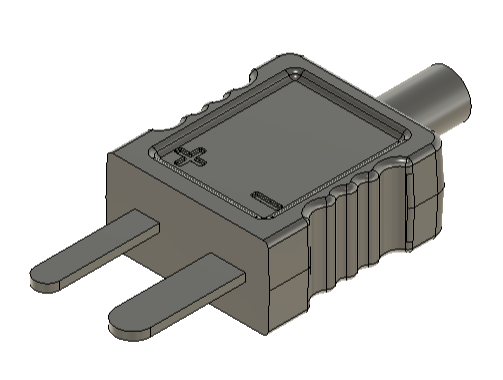
The objective was to create an injection-molded housing directly around a Type K thermocouple after all metallic components had been assembled and welded together.
A larger Type J thermocouple is also being considered and will be evaluated in a future validation phase.
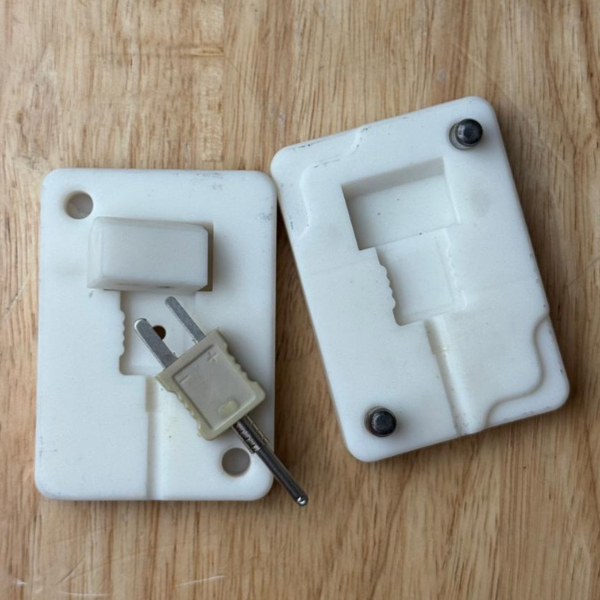
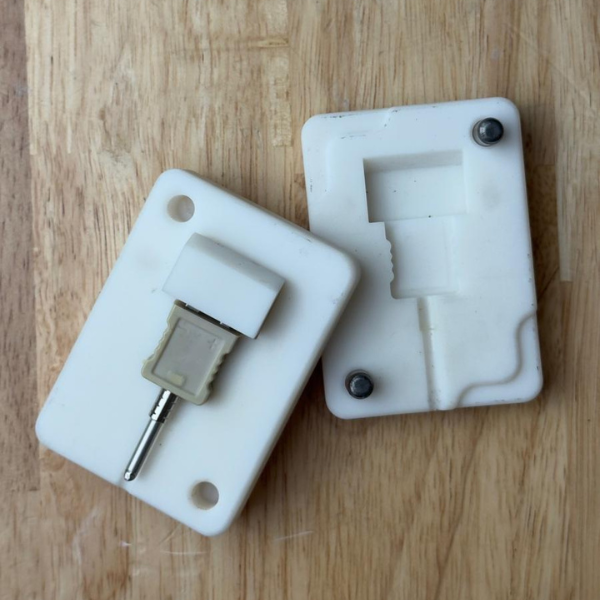
The mold was manufactured in Rigid 10K resin (from Formlabs), including the positioning insert directly within the tool.
This approach enables rapid production of a functional mold to validate the overmolding process before moving to a production-grade metal tool if needed.
Several thermoplastics were evaluated to meet different mechanical, thermal, and chemical requirements:
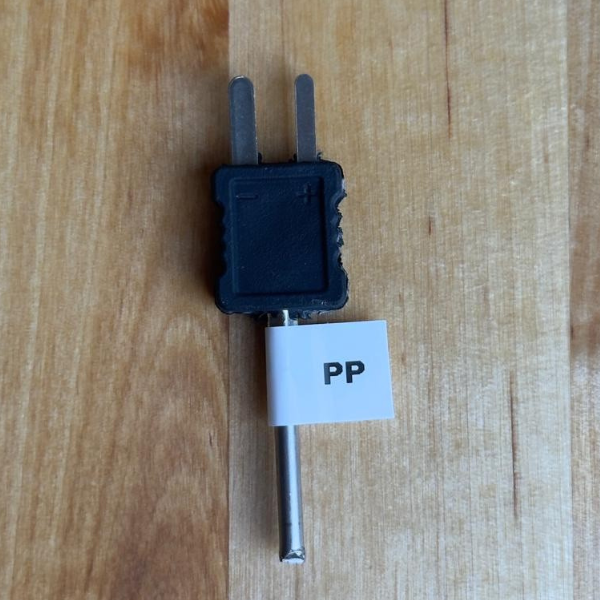
Thermocouple in PP
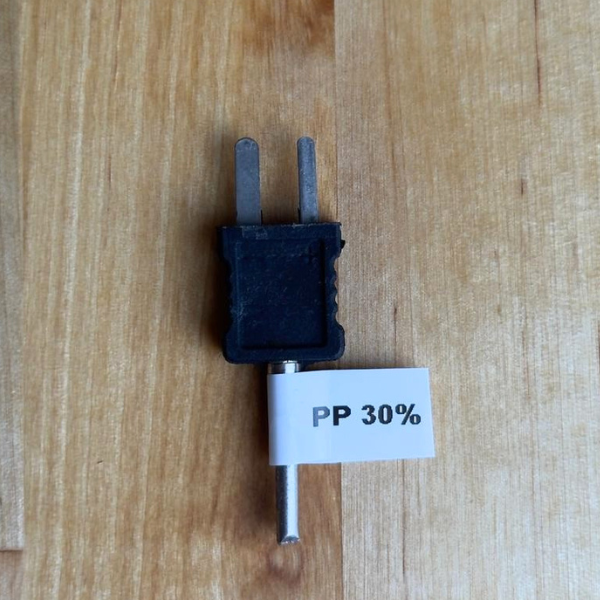
Thermocouple in PP charged with 30% glass fiber
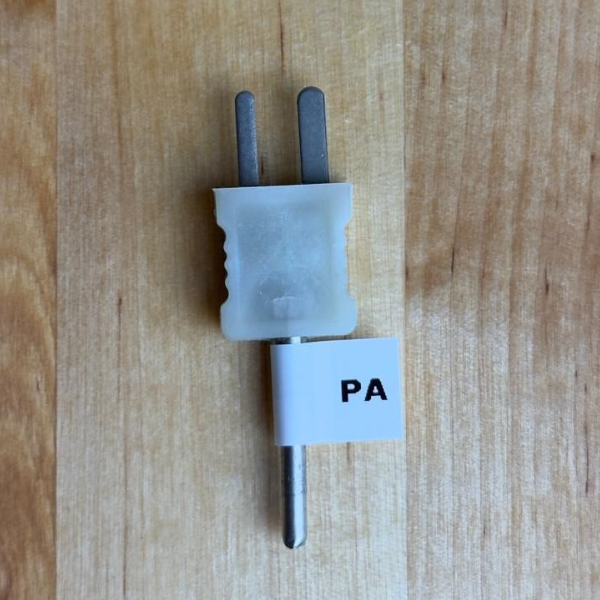
Thermocouple in PA
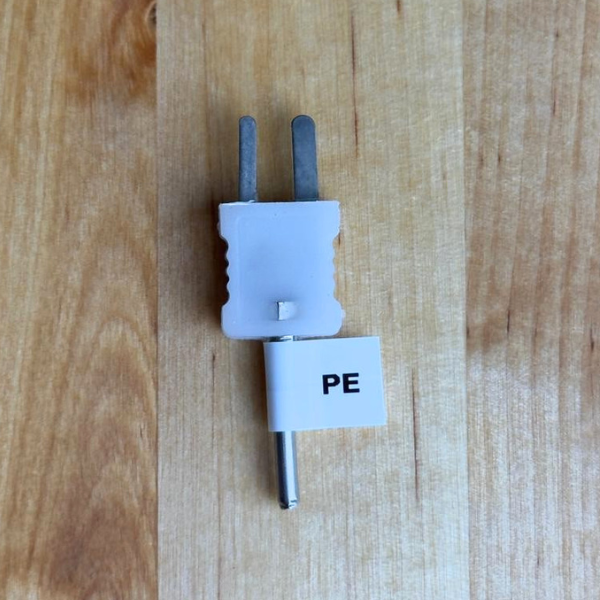
Thermocouple in PE
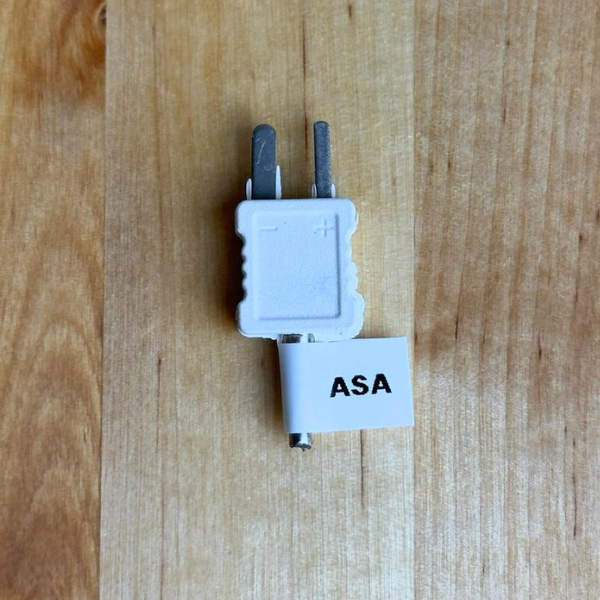
Thermocouple in ASA (Geloy)
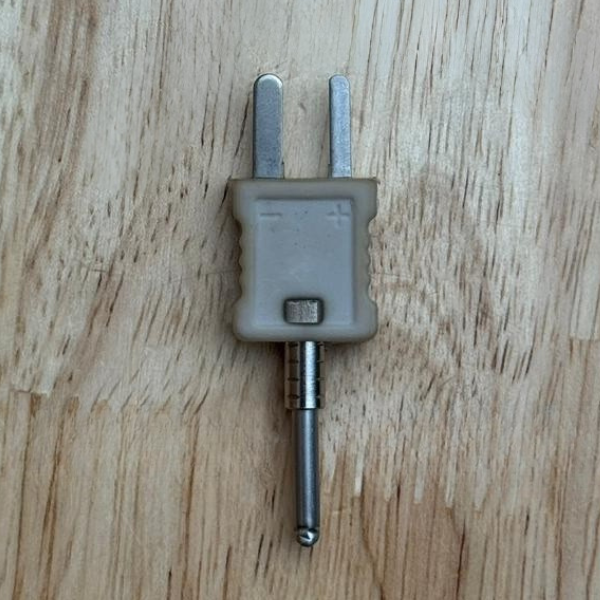
Thermocouple in PEEK
This material flexibility allows the design to be adapted to a wide range of operating environments.
Parameter | Value |
Injected volume | 1,8 cm³ |
Mold dimensions | 70 x 50 x 24 mm |
Part dimensions | 18 x 16 x 8 mm |
Process | Overmolding after complete welding assembly |
Tooling | 3D-printed Rigid 10K mold with integrated insert |
The success of an overmolding project depends as much on tooling design as on part design.
Insert retention, stress management during injection, and material selection are all critical factors that directly impact the quality and reliability of the final component.
By using a 3D-printed mold with integrated positioning features, complex overmolding processes can be validated quickly before full-scale industrialization.