
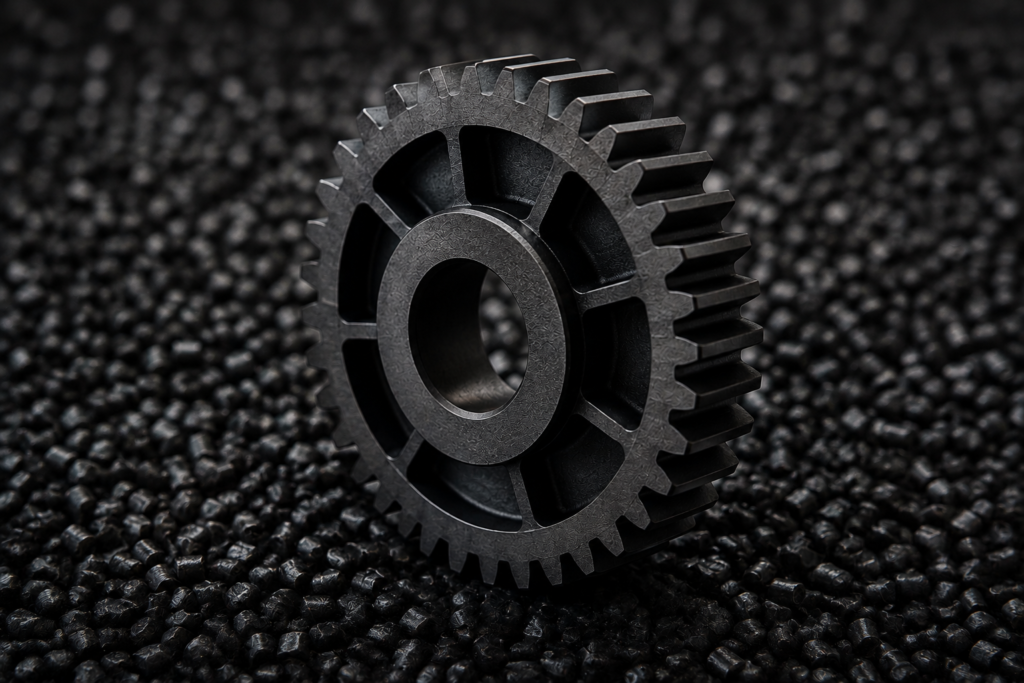
PPS (polyphenylene sulfide) is an engineering thermoplastic known for its high heat resistance, dimensional stability, and excellent chemical resistance. These properties make it well suited to demanding applications in the automotive, electronics, industrial, and aerospace sectors.
However, these performance benefits come with processing challenges. PPS requires higher processing temperatures than standard thermoplastics, and mold temperature must also be carefully controlled. These requirements can make prototyping and early-stage material testing more challenging.
The HoliPress High Temp enables engineers and R&D teams to explore the injection molding of high-performance thermoplastics such as PPS during product development.
PPS offers several properties that make it attractive for demanding technical applications:
Excellent heat resistance:
Certain grades can withstand continuous exposure to elevated temperatures, depending on the application and operating conditions.
High chemical resistance:
PPS resists many solvents, oils, and other chemical agents.
Low moisture absorption:
This helps maintain dimensional stability in demanding environments.
Flame resistance:
Some grades offer excellent flame-retardant properties.
Dimensional stability:
PPS is particularly useful for precision components that must maintain their dimensions under challenging conditions.
Glass-fiber-reinforced grades can also provide increased stiffness and improved mechanical performance.
These properties explain the material’s broad range of applications. In the automotive industry, PPS is used in under-the-hood components and parts exposed to heat or automotive fluids. In electronics, it is found in connectors and electrical insulation components. In industrial applications, PPS is used in selected pump and valve components and equipment exposed to aggressive chemicals. It can also be used in aerospace applications where specific requirements for thermal, chemical, and dimensional performance must be met.
The most suitable PPS grade depends on the mechanical, thermal, and regulatory requirements of each application.
The main challenge when processing PPS is controlling the conditions required for successful molding.
Depending on the grade, PPS is typically processed at melt temperatures of around 300–350°C (572–662°F). Mold temperature is also important because it affects filling, crystallization, and the final properties of the molded part.
Several factors need to be considered:
These requirements make equipment selection and process control particularly important during initial molding trials.
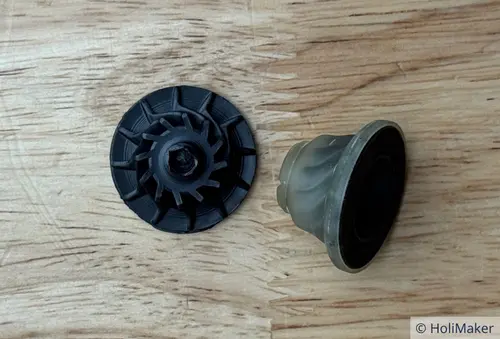
To demonstrate the capabilities of compact injection molding on a technical part, HoliMaker injection-molded a PPS turbine.
The goal was to combine a high-performance material with a part featuring complex internal elements, while using a mold produced via additive manufacturing.
The mold consisted of two complementary elements:
This approach makes it possible to create geometries that can be difficult to demold using conventional tooling. After injection molding, the soluble inserts can be dissolved to release the finished part.
This case study illustrates the benefits of combining compact injection molding with additive manufacturing. The final part is made from an engineering thermoplastic, while the tooling can be produced relatively quickly and tailored to the project’s requirements.
Processing materials such as PPS requires equipment capable of reaching the necessary melt temperatures.
The HoliPress High Temp can reach temperatures of up to 500°C (932°F), making it suitable for exploring the injection molding of engineering and high-performance thermoplastics that require elevated processing temperatures, including PPS, PEEK, and PEI, subject to the processing requirements of each grade.
This temperature range allows R&D teams and manufacturers to conduct molding trials on a more accessible scale before moving to industrial equipment.
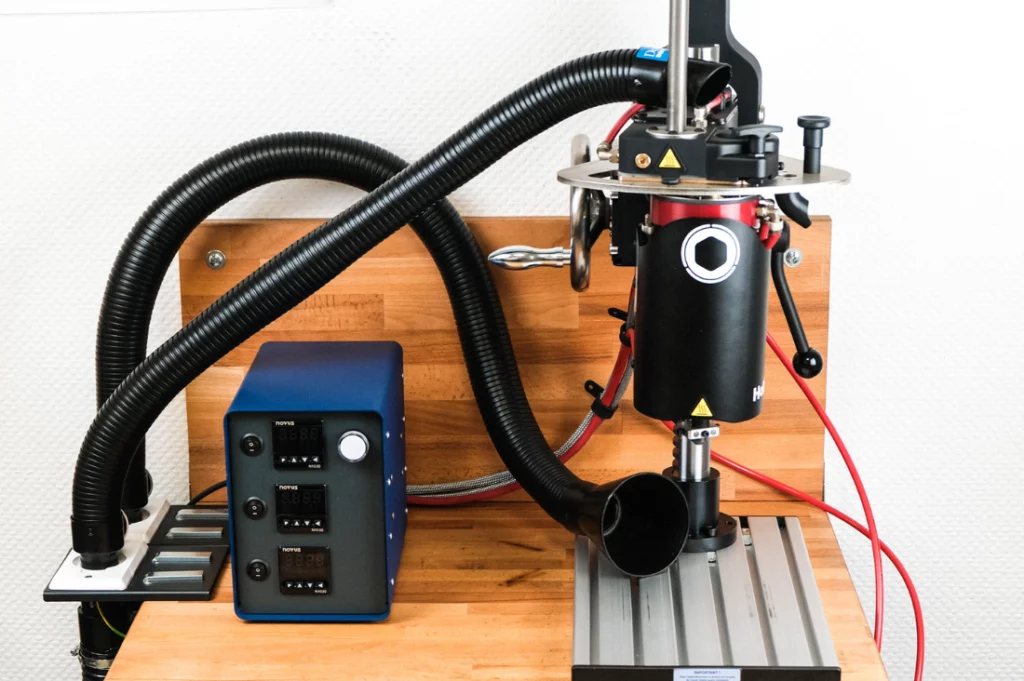
A compact injection molding machine is not intended to replace industrial equipment for high-volume production. Instead, it can make the early stages of product development more accessible and help teams evaluate materials and designs before committing to larger industrial investments.
With a HoliPress, it is possible to:
This approach is particularly useful when the actual behavior of a material needs to be evaluated before investing in production tooling or a larger manufacturing trial.
Injection molding PPS requires carefully controlled processing conditions, but initial trials do not necessarily require access to an industrial injection molding machine. By combining a HoliPress High Temp with suitable tooling solutions, engineers can explore high-performance thermoplastics and validate part designs during the prototyping stage.
When production volumes and cycle-time requirements increase, industrial injection molding remains the appropriate solution for high-volume manufacturing.
Share on