
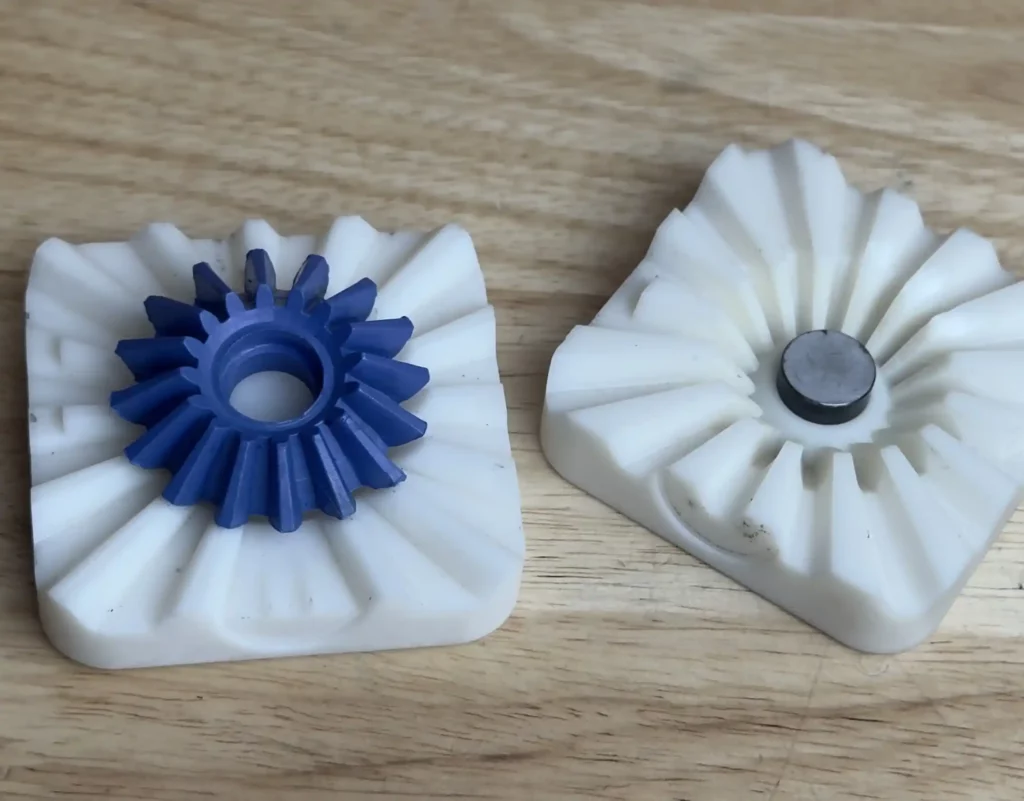
Combining a 3D printed resin mold with a desktop injection molding machine such as HoliPress makes it possible to quickly validate functional plastic parts without immediately investing in a metal tool.
This approach, at the crossroads of 3D printing, additive manufacturing and plastic injection molding, allows you to test a part’s geometry, material, injection point and overall molding behavior before finalizing the mold design.
As the project evolves, however, requirements can change: more cycles, greater part consistency, shorter cycle times or a longer mold lifetime may become important. This is when moving from a 3D printed mold to a machined mold can make sense.
And changing the mold does not necessarily mean changing the machine: a machined mold can also be used on a HoliPress.
A 3D printed mold makes it possible to go from a CAD file to injection molding trials quickly.
With a HoliPress, it can be used to test the right process with the right material and produce a truly functional prototype.
You can validate:
The main advantage is the ability to quickly modify the mold and test different versions before manufacturing a metal tool.
A 3D printed resin mold is particularly well suited to prototyping, but its properties can change over repeated cycles. Its mechanical and thermal resistance is generally lower than that of a metal mold, while its lower thermal conductivity can result in longer cooling times.
When a project requires greater consistency, more cycles or increased durability, a machined mold can take the project to the next stage.
Aluminum and steel provide greater dimensional stability, a longer mold lifetime and more efficient heat dissipation.
The choice of mold and the choice of injection molding machine are two separate decisions.
This configuration is particularly suited to:
The low cost and short lead time of a 3D printed mold make it easy to iterate.
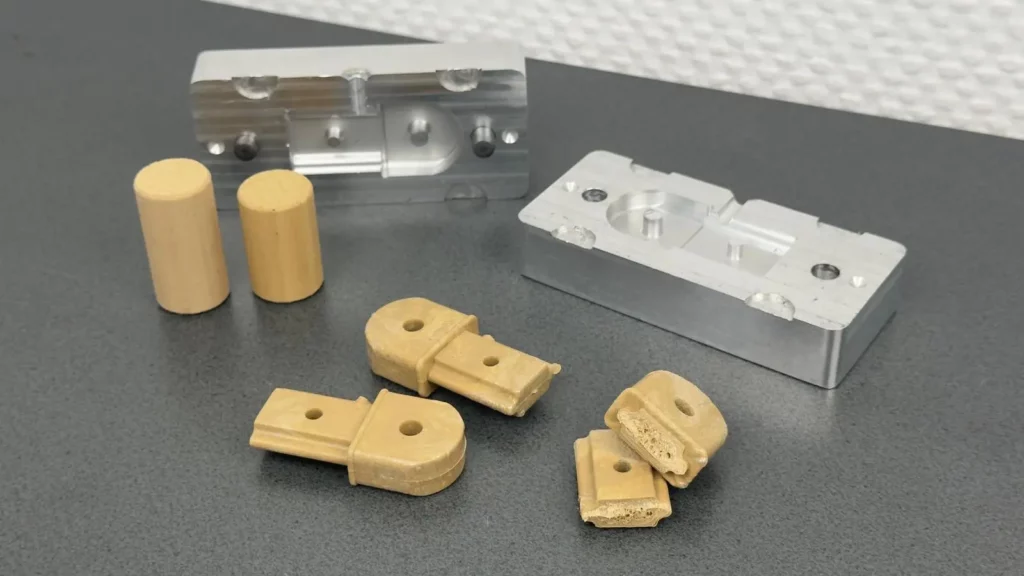
Once the design has been validated, there is no need to immediately move to an industrial injection molding machine.
A machined mold can be installed on a HoliPress, allowing you to keep the same injection molding process while benefiting from a more durable metal tool.
This configuration can provide:
Moving from a 3D printed mold to a machined mold can therefore improve the tooling without necessarily requiring a different injection molding machine.
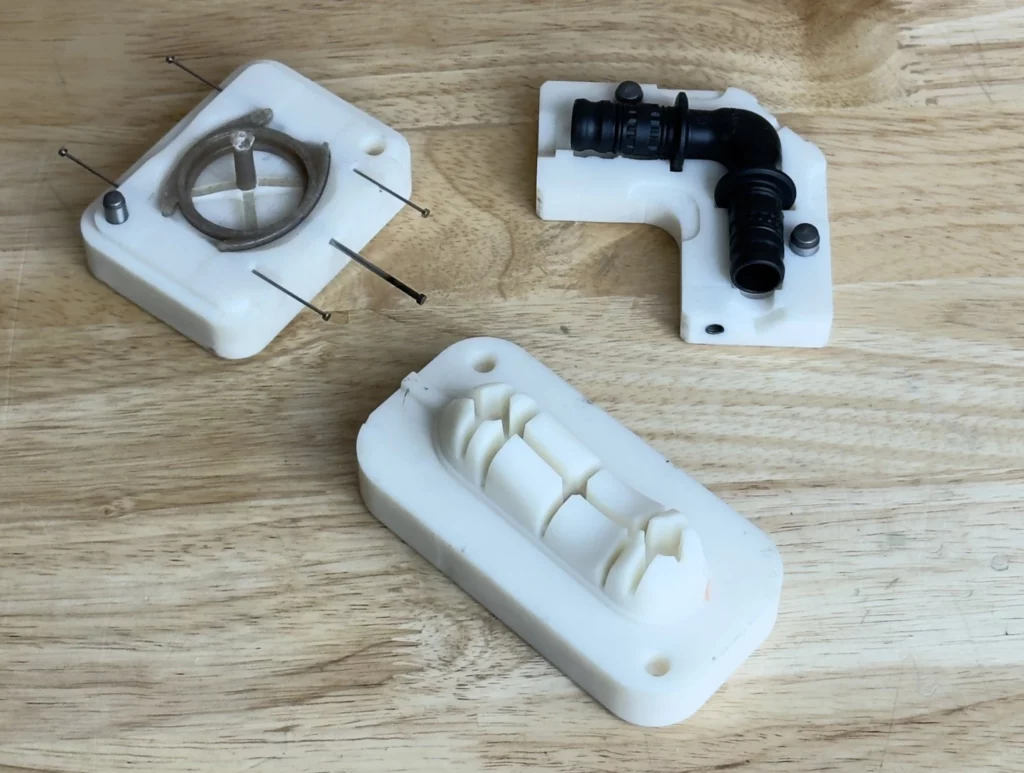
A 3D printed mold for injection molding is not simply a cavity.
To produce a functional and representative prototype, it must incorporate the features required for the injection process to work correctly:
The goal is therefore not to create a “simplified” mold, but a genuine tooling prototype capable of producing the part under representative injection molding conditions.
When moving to a machined mold, the validated design can then be adapted to the requirements of machining, such as tool access, tolerances, surface finishes or specific geometries.
Before manufacturing a metal mold, injection molding trials on a HoliPress make it possible to test the design under real processing conditions.
You can check:
These trials help secure the design of the future machined mold.
Rather than discovering an issue after investing in a metal tool, it can be identified and corrected beforehand using a 3D printed mold.
3D printing therefore becomes a way to test the tooling before investing in a more durable version.
There is no universal number of parts at which a 3D printed mold should be replaced.
The decision mainly depends on the project requirements:
Moving to a machined mold is therefore an evolution of the tooling based on the project’s requirements, rather than an automatic change of machine.
A machined mold designed for a HoliPress does not need to be designed like a mold intended for a high-capacity industrial injection molding machine.
It should, however, retain all the features required to produce functional and consistent parts: alignment, parting line, vents, ejection, inserts, injection point and geometry adapted to the part.
The objective is to benefit from the advantages of metal — durability, stability and repeatability — without oversizing the tooling compared with the capabilities of the machine and the actual requirements of the project.
The trials carried out with the 3D printed mold can directly support this design process: validated geometry, injection point location, ejection system, vents, inserts and any design changes identified during testing.
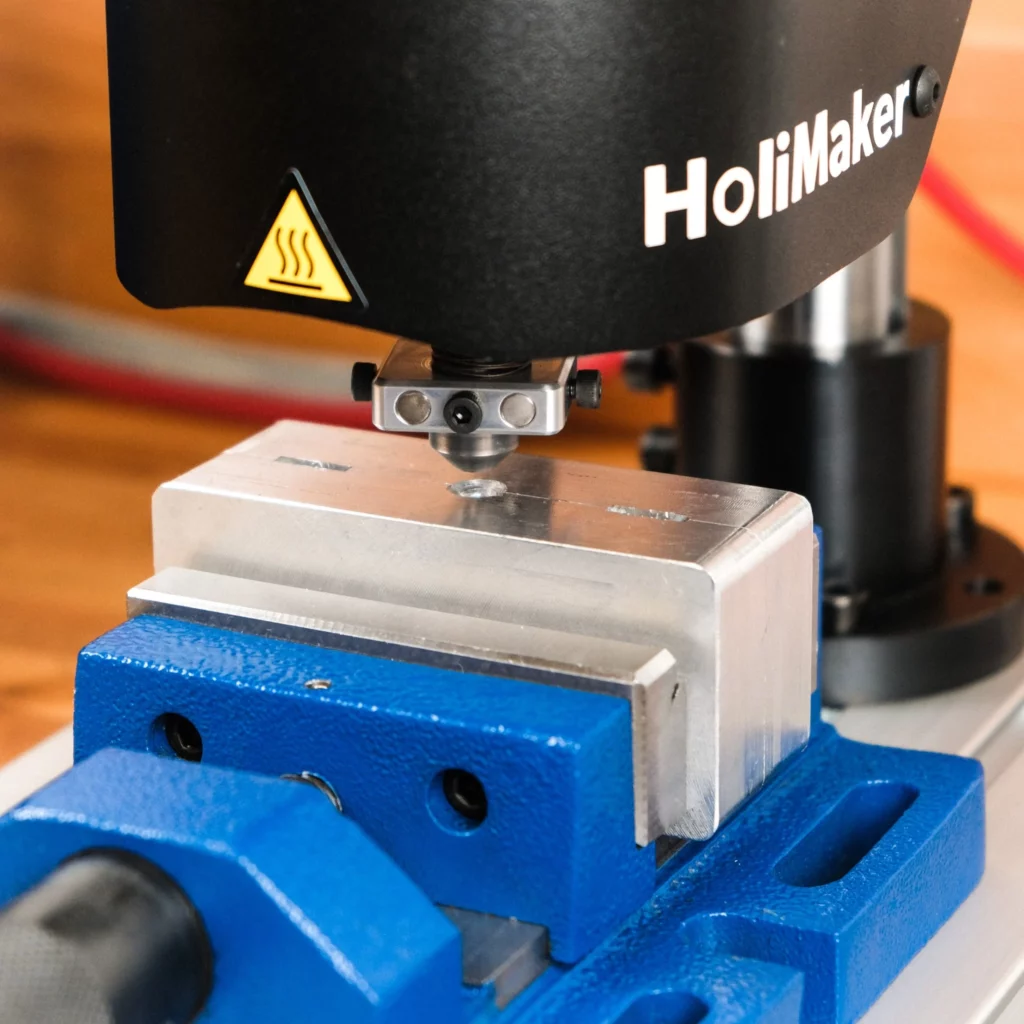
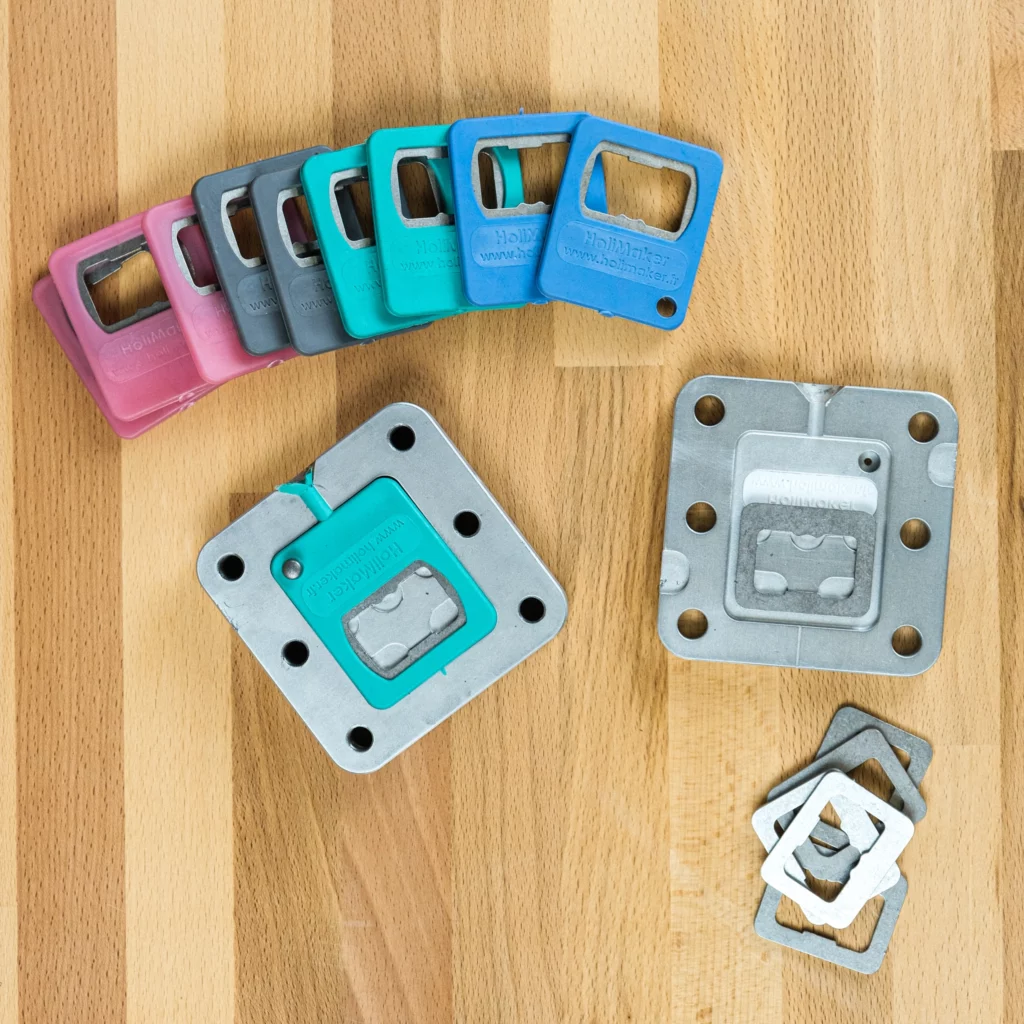
A 3D printed mold and a machined mold are not opposing solutions. They can be used as successive stages of the same development process, with HoliPress serving as the injection molding machine.
3D printed mold + HoliPress: develop and validate a functional prototype using the right material and the right injection molding process.
Machined mold + HoliPress: keep the same process while benefiting from more durable, stable tooling capable of supporting more cycles.
Then, when production requirements genuinely increase to the point where high volumes and industrial cycle rates are needed, working with a specialized injection molding partner equipped with industrial machines becomes the more appropriate solution.
HoliPress is not intended to replace high-volume industrial production. Its role is to enable companies to develop, test and produce functional plastic parts efficiently before reaching that level of production.
Share on