
In higher education, giving students hands-on experience with plastic injection molding under realistic conditions can be challenging. Industrial injection molding machines are not always suited to rapid experimentation, metal molds can be expensive, and each iteration can take considerable time.
To address these challenges, IMT Nord Europe (IMT NE), part of the Institut Mines-Télécom network, has integrated several HoliPress machines into its educational and applied research projects.
The goal is to enable students and researchers to design 3D-printed molds, inject functional plastic parts, test recycled and bio-based materials, and validate concepts quickly — without relying on costly, time-consuming industrial tooling.
The result is a practical environment for teaching injection molding, accelerating prototyping, and developing projects with real-world applications.
As part of several INTERREG FWVL projects, including AGILITY, COMPOVERT and RE-ASSIGN, IMT Nord Europe was looking for a way to:
The challenge was not simply to manufacture plastic parts. It was to create an environment where students and researchers could learn by doing: experiment, identify problems, make improvements and demonstrate results in a short amount of time.
IMT Nord Europe has used several HoliPress machines in INTERREG FWVL projects such as AGILITY, COMPOVERT and RE-ASSIGN, as well as initiatives focused on recycling and biomaterials.
These projects aim to support companies in their innovation efforts by helping them develop new materials and processes, particularly in the field of recycling.
HoliPress provides a practical solution for this combination of education, applied research and technology transfer.
Rather than using 3D printing to manufacture the final part, the team uses it to produce the injection mold itself. This gives students and researchers the opportunity to work through the entire manufacturing process:
This approach turns a course or student project into a complete manufacturing experience, making the learning process far more engaging than a purely theoretical exercise.
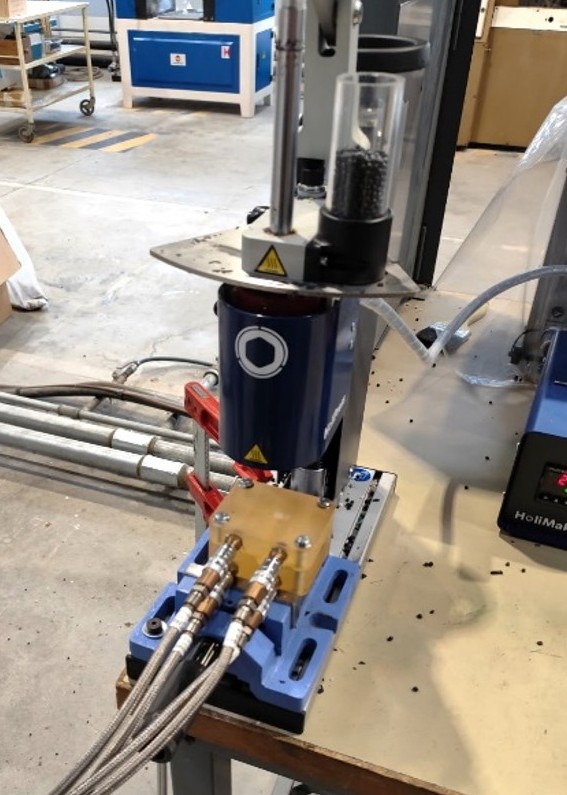
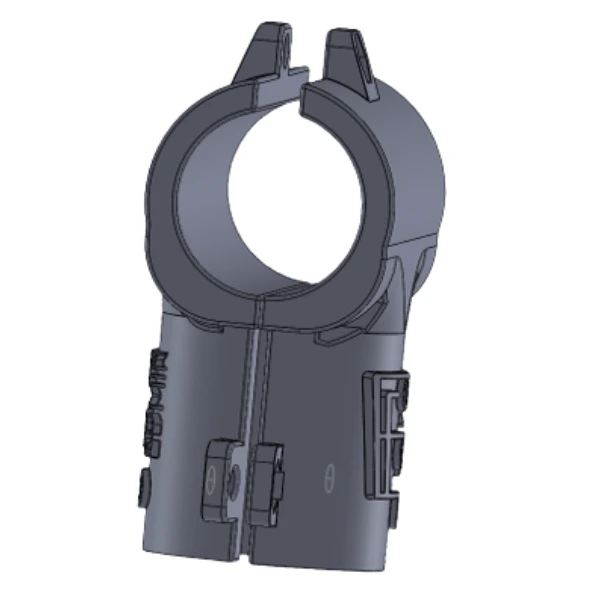
As part of a student project linked to the AGILITY research project, the team worked on repairing music stands used by a music school.
A component kept breaking at the same point, leaving the equipment out of service. The team set out to redesign and reproduce the part to provide a practical, longer-lasting solution.
Using HoliPress, students and researchers were able to:
The project resulted in the production of several dozen parts, helping put around 20 music stands back into service.
This single project brings together a wide range of engineering skills:
The result is a hands-on, multidisciplinary project with a tangible outcome and an immediate practical benefit.
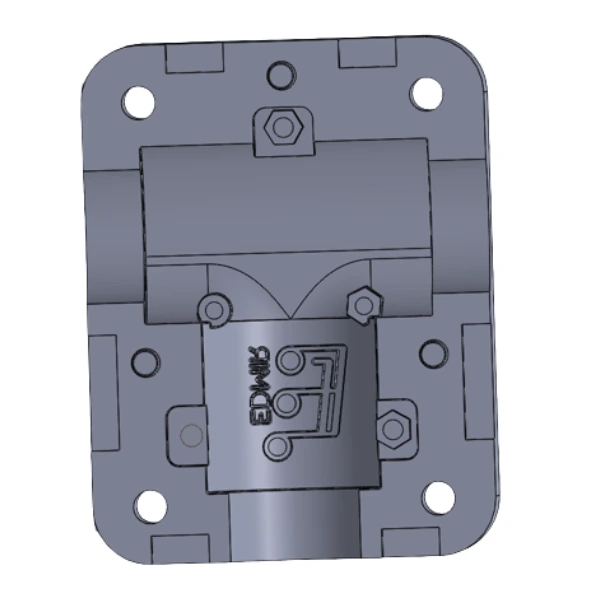
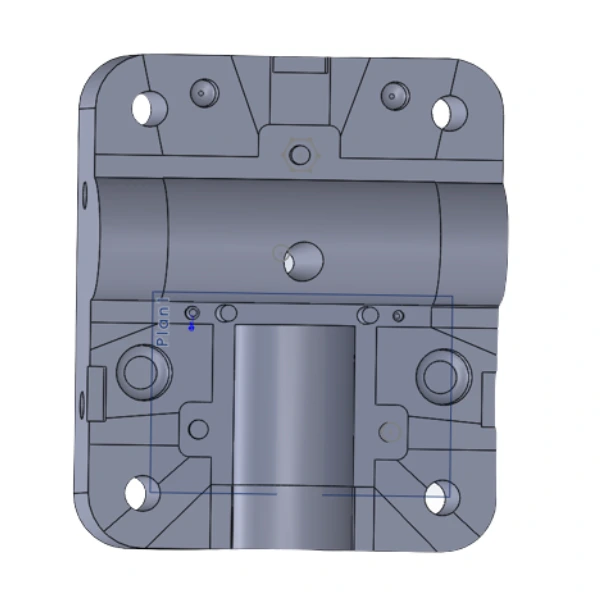
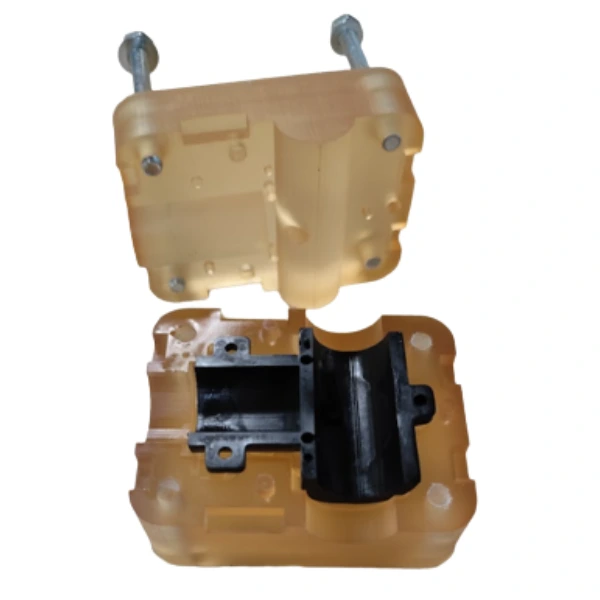
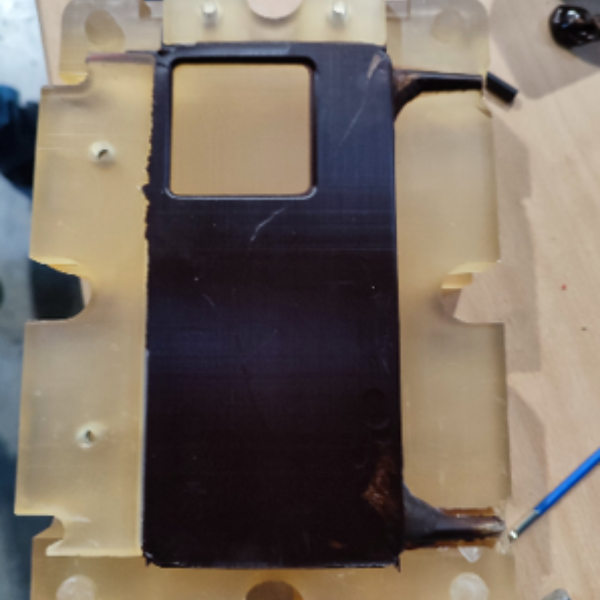
In another project, IMT Nord Europe used HoliPress to develop an injection-molded phone case made from PLA compounded with lignin, a bio-based material derived from plant biomass. The work was carried out as part of the COMPOVERT project.
The project offered two main educational benefits:
The team was able to:
This demonstrates how a compact injection molding machine can help students and researchers explore the relationship between part design, mold design, material behavior and manufacturing feasibility.
Projects like this show that HoliPress is more than a machine for running material tests. It becomes a tool for teaching industrial engineering principles, taking projects from simulation through to functional prototyping.
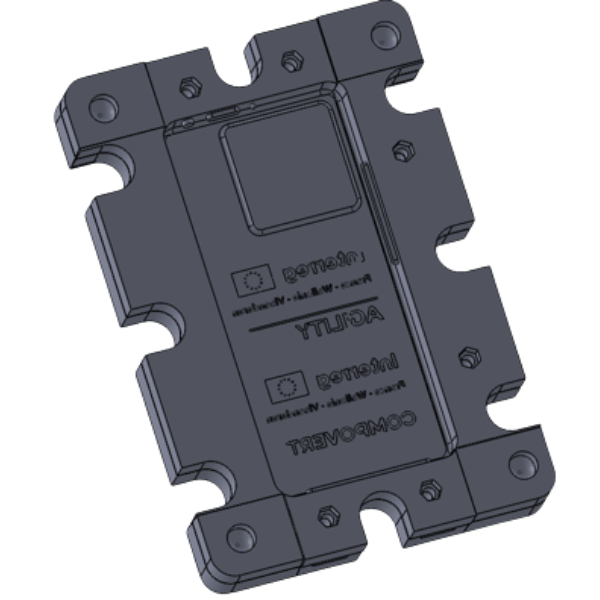
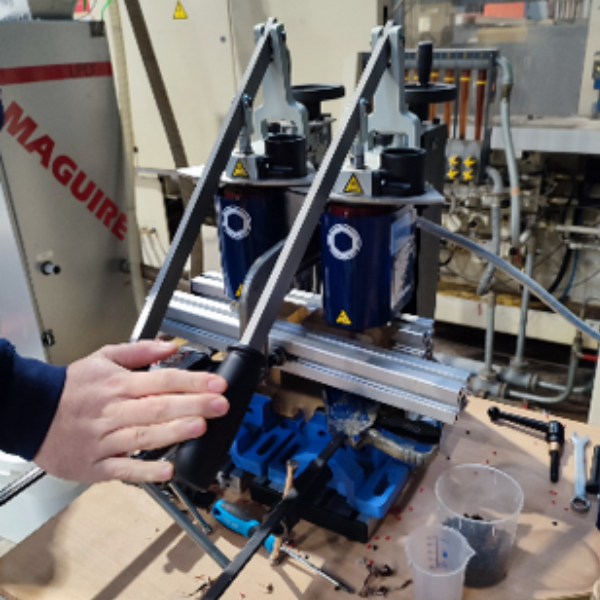
IMT Nord Europe has also used HoliPress to manufacture a range of demonstration parts and promotional items, including:
These objects have genuine educational value. They are quick to manufacture, easy to customize and give students a tangible result at the end of a workshop, while illustrating the fundamentals of plastic injection molding.
Beyond the classroom, HoliPress also serves as a valuable tool for showcasing the institution’s expertise.
Live injection molding demonstrations at trade shows, open days and other events help attract visitors, spark curiosity and make technical courses more appealing. Watching a part being manufactured in front of them helps prospective students picture themselves working in engineering and plastics processing, while highlighting the school’s capabilities and the projects developed by its students.
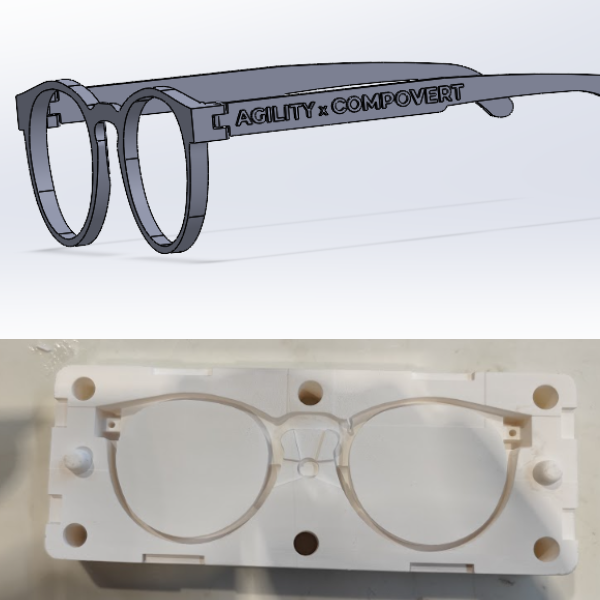
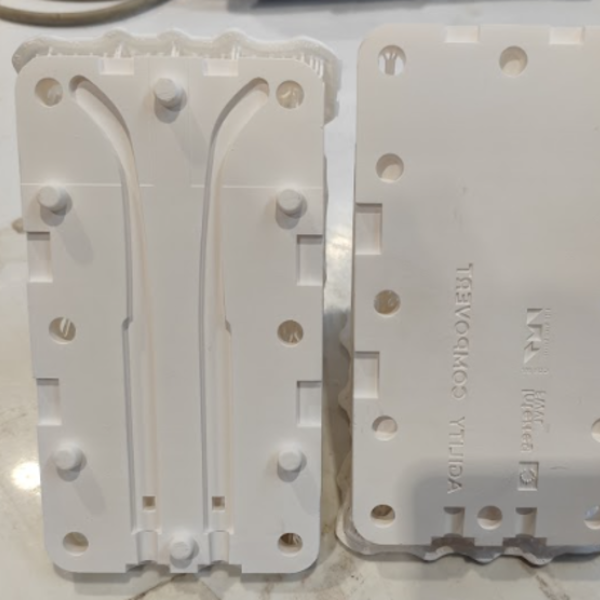
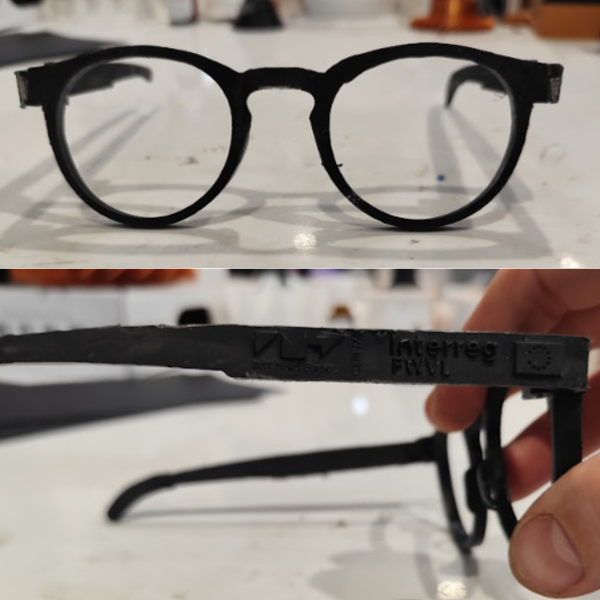

With HoliPress, IMT Nord Europe has been able to prototype, test and refine parts and molds quickly, without waiting for metal tooling to be manufactured.
For teaching teams, this makes a significant difference. Iterations can fit within the timeframe of a semester, a supervised student project or an internship. Students can move from design to manufacturing, evaluate the results and improve their work within a realistic academic schedule.

Students do not simply learn the theory behind plastic injection molding. They design parts, create molds, print tooling, inject materials, identify defects and improve the process.
This hands-on approach provides valuable experience in: injection-molded part design, mold design, parting lines, venting, mold cooling, material selection, demolding constraints, design for manufacturing and industrialization.
By working through these stages themselves, students gain a better understanding of the technical decisions involved in manufacturing functional plastic parts.

IMT Nord Europe has used HoliPress to test recycled and bio-based materials.
For institutions working on circular economy initiatives, eco-design or the development of more sustainable polymers, this offers an effective way to experiment with materials and assess their processing behavior through injection molding.
It also allows teams to connect material development with practical applications, helping them move from research concepts towards functional demonstrators.

Across its different projects, several HoliPress capabilities have proved particularly valuable in an educational and prototyping environment:
– Fast setup and experimentation: ideal for practical exercises, testing and iterative development.
– Compatibility with 3D-printed molds: enables teams to produce and modify tooling without waiting for a metal mold.
– Material flexibility: supports experimentation with a variety of polymers, including recycled and bio-based materials.
– Adaptability: makes it easier to test different geometries, inserts and mold design improvements.
Together, these capabilities give students and researchers greater flexibility throughout the product development process.
HoliPress is particularly relevant to engineering schools, universities, technical colleges, technology platforms and research centers looking to develop hands-on expertise in plastic injection molding.
It can be integrated into a teaching workshop, a fab lab or a research laboratory, providing students and teaching staff with a practical tool to experiment, prototype and validate projects quickly.
Whether used in practical classes, supervised projects, internships, research activities or collaborations with industrial partners, HoliPress encourages learning through practice and brings students closer to the manufacturing processes they will encounter in industry.
At IMT Nord Europe, HoliPress has helped make plastic injection molding a practical educational tool for technical projects with tangible, real-world applications.
The machine supports a wide range of activities, including:
For universities and research centers, HoliPress offers an effective way to make injection molding more accessible, practical and faster to teach and use — while developing projects that engage both students and industrial partners.