
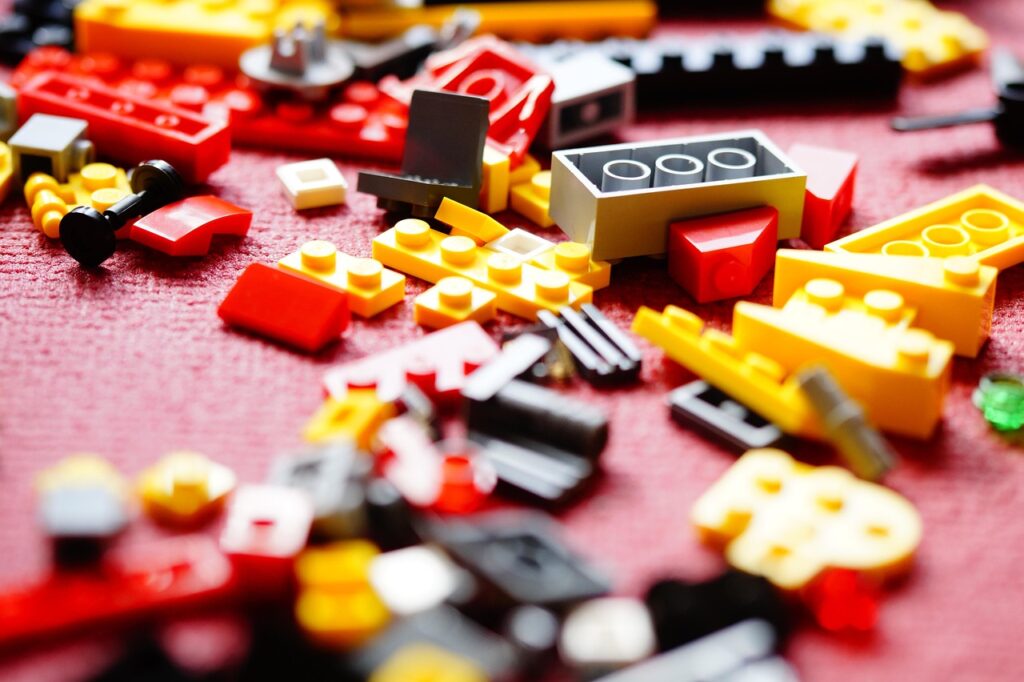
ABS plastic (acrylonitrile butadiene styrene) is a widely used polymer valued for its high impact resistance, good mechanical strength, and excellent processability. This technical plastic appears in countless products — from LEGO bricks and automotive dashboards to medical device housings, prototyping equipment, and 3D printing filaments.
Because of its unique properties, ABS plastic offers manufacturers a high-quality material for creating durable, reliable and attractive components. It performs well in both small-batch prototyping and large-scale manufacturing.
ABS (acrylonitrile butadiene styrene) is a copolymer made from three monomers:
This combination gives ABS plastic its characteristic balance of strength, impact resistance, and heat performance. The resulting polymer is often used as a substitute for acrylic when higher impact strength or better chemical resistance is needed.
Patented in 1948, acrylonitrile butadiene styrene quickly became a key material during the post-war manufacturing boom. Industries needed plastics with good tensile strength, impact resistance and reliable processing temperatures for mass production.
An iconic milestone arrived in 1963 when LEGO switched its bricks to ABS plastic — a high-quality polymer famous for its precision, durability and glossy finish. Since then, ABS materials have been integral to product design, electronics, mobility, medical equipment, and even small-batch prototyping.

Excellent impact resistance and toughness at low temperatures
Good balance of rigidity and lightness
High chemical resistance to many everyday substances
Good heat resistance and dimensional stability
Easy to process by injection molding and thermoforming
Service temperature: typically –20 °C to 80 °C
Mechanically recyclable for circular manufacturing
ABS is also available as ABS sheets and ABS plastic sheet for thermoformed panels, guards and housings. These plastic sheets retain the same impact resistance ABS is known for and are widely used in medical equipment housings and other technical projects.
Low UV resistance without stabilizers
Limited fatigue strength under repeated bending
Contains styrene, a volatile substance that can be harmful in raw form
Derived from non-renewable petrochemical resources
May vary by manufacturer
This profile makes ABS plastic sheet and molded parts a dependable material for manufacturing both functional and aesthetic components where heat and impact are key factors.
Some ABS require drying for several hours.
ABS is highly versatile. Manufacturers can tailor plastic ABS properties to specific applications:
Each variant requires adapted injection molding settings (temperature, drying, pressure) to achieve high quality ABS results in your project.
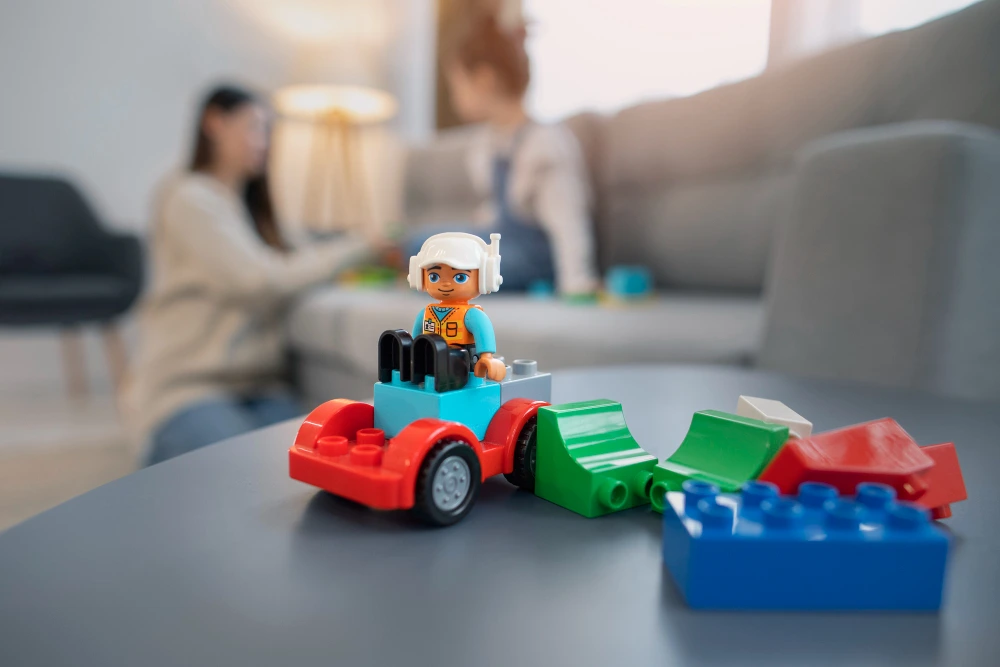
Toys (LEGO bricks, figurines, accessories)

Electronics (housings, computer cases, phone covers)

Automotive parts (dashboards, trims, bumpers)
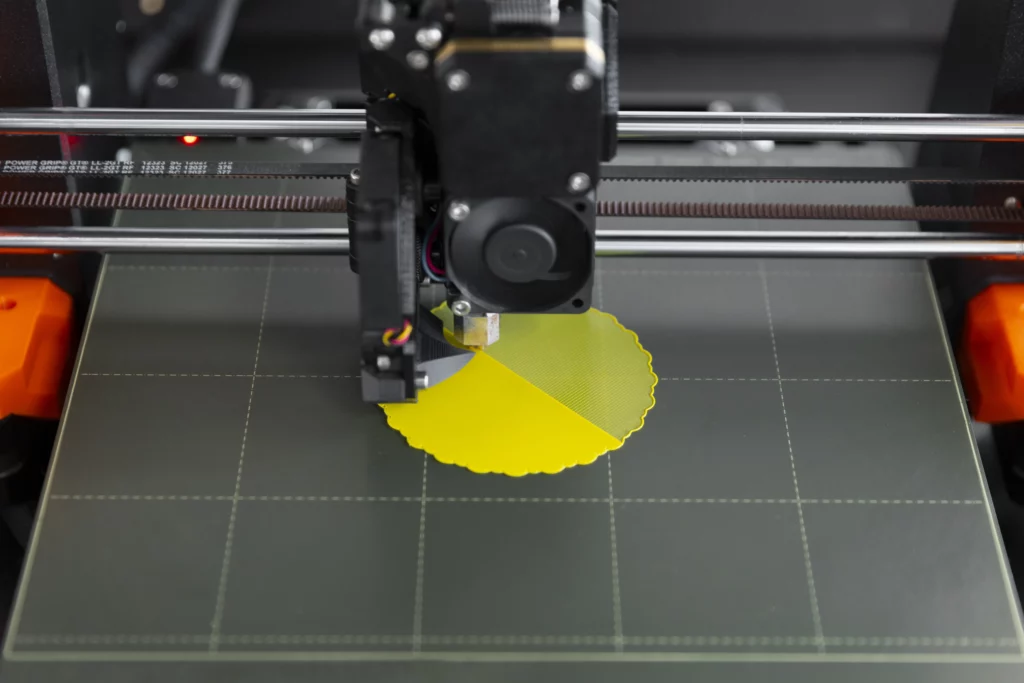
3D printing FDM (strong prototypes and functional parts)
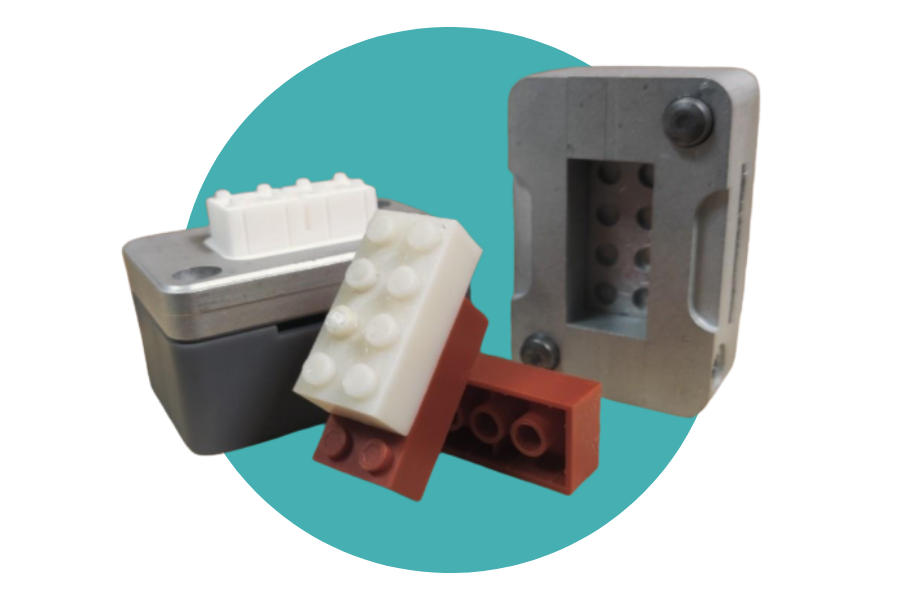
At HoliMaker, we injected a red brick similar to LEGO ones in our workshop using a HoliPress 16 manual press with the following settings:
Tip: After compacting the material, purge a few cubic centimeters before injection to avoid bubbles or impurities.
This approach shows how injection molding of ABS plastic products on a small scale can prototype directly in the final polymer, reducing waste and production time, and working well for educational, industrial or health projects.
ABS plastic is produced from styrene, acrylonitrile, and butadiene, all petrochemical monomers. These substances are toxic in raw form and rely on non-renewable resources, giving ABS materials a significant environmental footprint.
However, as a thermoplastic polymer, ABS acrylonitrile butadiene can be mechanically recycled: ground, remelted, and reinjected to create new plastic products. Increasingly, manufacturers are using regenerated ABS plastic sheet and parts, supporting more local, circular and high quality ABS production models.
Using tools like the HoliPress manual press, it becomes possible to:
We have also tested Floreon, a promising biosourced alternative to ABS. Developed from modified PLA (polylactic acid), this bioplastic combines good technical performance with a reduced environmental impact.
Unlike ABS, Floreon comes from renewable resources and does not contain toxic substances like styrene or butadiene. It offers higher impact resistance than standard PLA, along with good thermal stability, making it suitable for certain technical and health applications.
At end-of-life, Floreon remains industrially compostable under specific conditions, and its production yields a much lower carbon footprint than petroleum-based plastics. For manual press users like with HoliPress, it opens the door to cleaner injection molding without major compromises on impact strength.
Versatile and easy to process, ABS plastic remains a valuable polymer for combining high impact resistance, aesthetics, and accessibility. While it does raise environmental concerns, it still plays a key role in many ABS plastic products — especially when used responsibly or recycled.
At HoliMaker, we continue to explore high quality ABS potential through prototyping and small-scale injection molding, while also studying biosourced alternatives to support a transition toward more sustainable practices. Whether your project involves health, plastic sheets, or custom prototypes, ABS polymer performs well when you need good strength, heat resistance and chemical durability.
Do you work with ABS plastic sheet or ABS plastic products? Do you have tips or projects to share?
Contact us if you are developing ABS plastics applications or want to discover HoliPress.
Share it on