
Produce dozens or hundreds of injection-molded parts in-house with HoliPress. An affordable, flexible solution for bringing products to market and validating demand before committing to larger investments.
Outsourcing a small or very small injection molding run can quickly become prohibitively expensive. Industrial metal tooling alone can cost several thousand euros, not to mention setup fees and lead times for booking time on industrial injection molding machines.
This is where HoliPress makes a difference.
Full in-house control: Produce pre-production batches whenever you need them, without relying on an external supplier.
Cost-effective from the very first parts: Avoid the high upfront cost of industrial tooling. Add a 3D printer to manufacture your own molds at a fraction of the cost.
Validate your market before scaling up: Test real-world demand and refine your product before making larger investments in production tooling.
To make small-batch production smoother and more efficient, our machines incorporate features suited to short production runs.
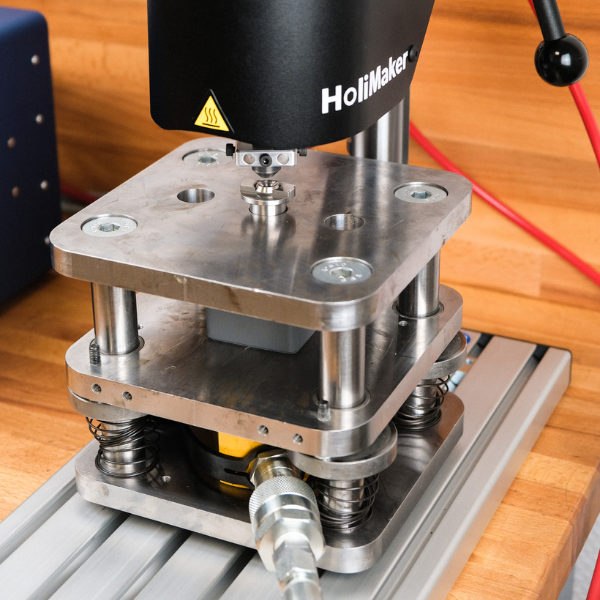
Hydraulic clamping system
No more repeatedly tightening screws to secure the mold by hand — a tedious task when producing multiple parts. The hydraulic clamping system holds the mold securely and consistently, reducing operator effort and fatigue.
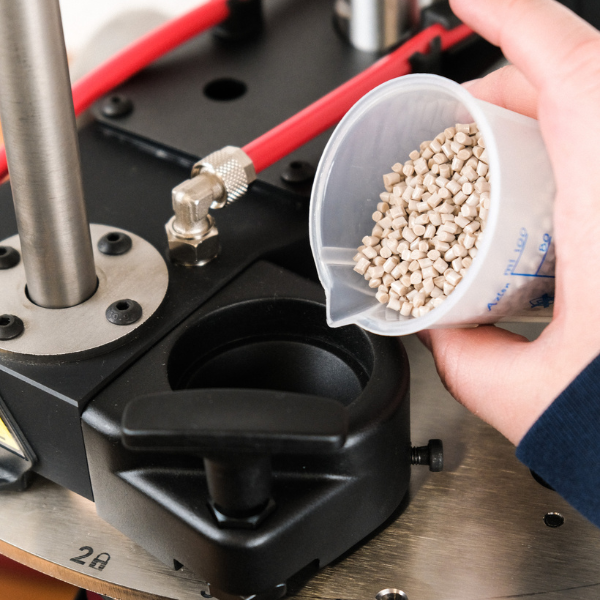
Continuous material feeding
Refill the material between injection cycles to keep production moving and minimize downtime.
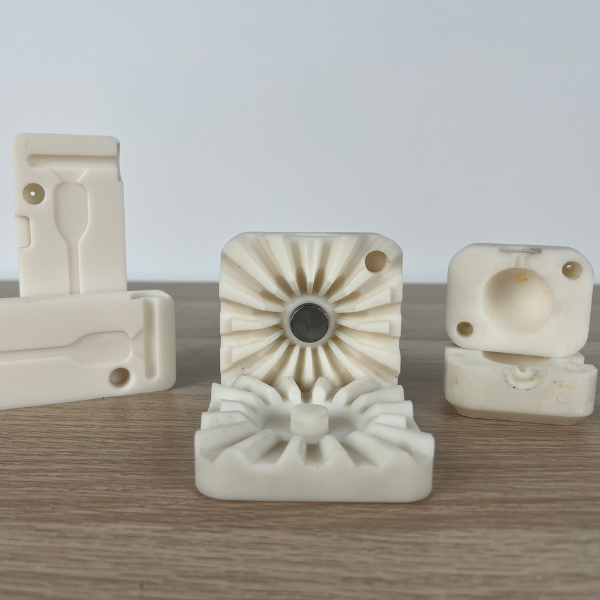
Optimized mold design
The clamping system allows you to reduce the amount of material needed to manufacture a mold, whether metal or SLA 3D-printed resin, helping lower tooling costs even further.
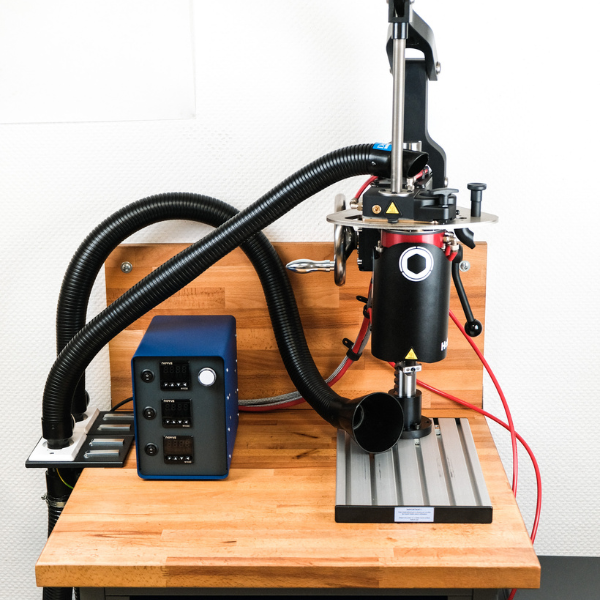
High-temperature injection molding
Process standard and engineering thermoplastics at temperatures of up to 500°C with the HoliPress High Temp.
For batches of 10 to 100 parts, an expensive metal mold may not be necessary.
Using SLA 3D-printing resins, including ceramic-filled formulations, you can produce durable mold inserts capable of withstanding multiple injection cycles.
Mold life depends on the material being injected, the part geometry and the processing conditions. This approach can help you produce an initial batch of parts quickly and assess whether your product is ready for the next stage.


In 2021, Francisco wanted to validate his market without investing thousands of euros in industrial tooling. He designed his own 3D-printed molds and used HoliPress to produce a pre-production batch of 500 parts in naturally colored polypropylene (PP).
The result? A successful proof of concept that helped demonstrate the commercial viability of his project.
Key takeaways:
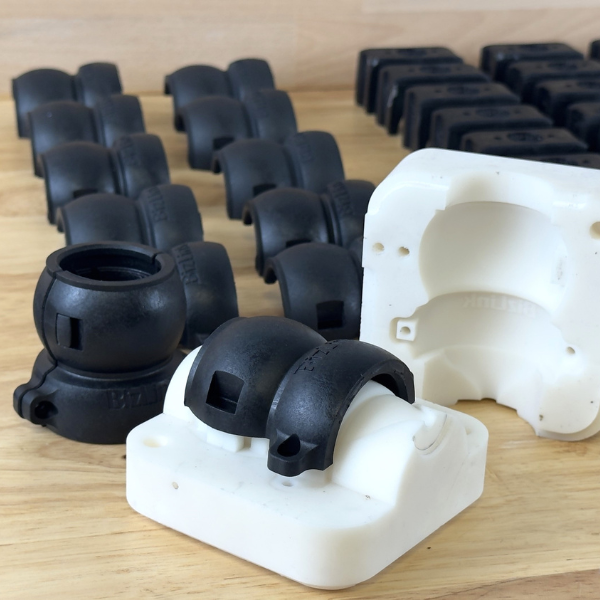
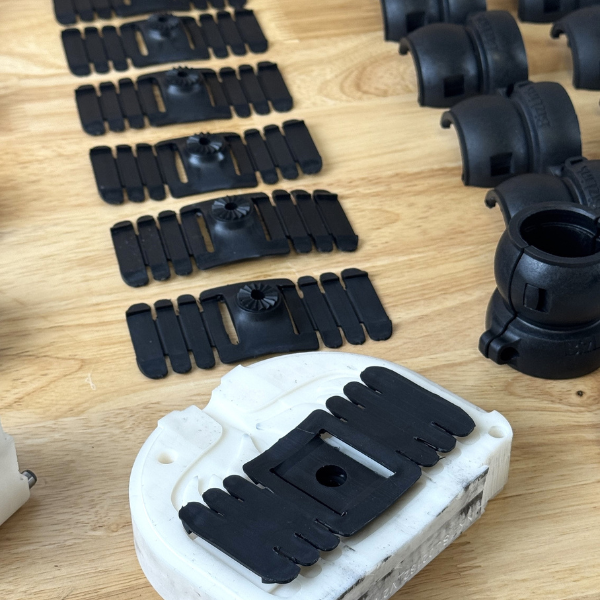
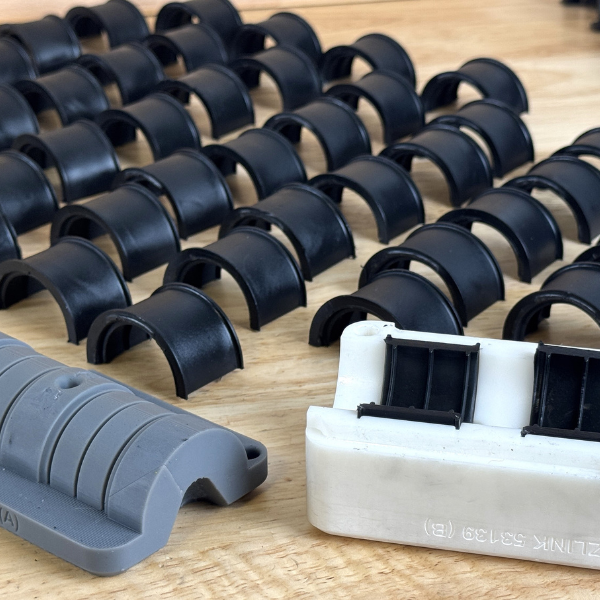
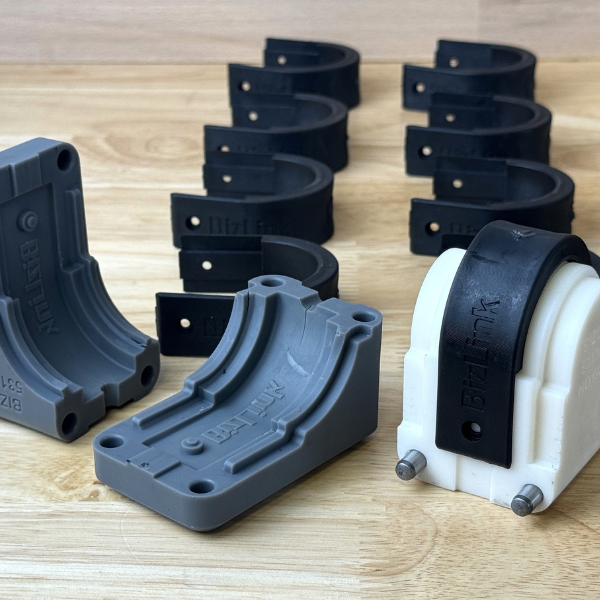
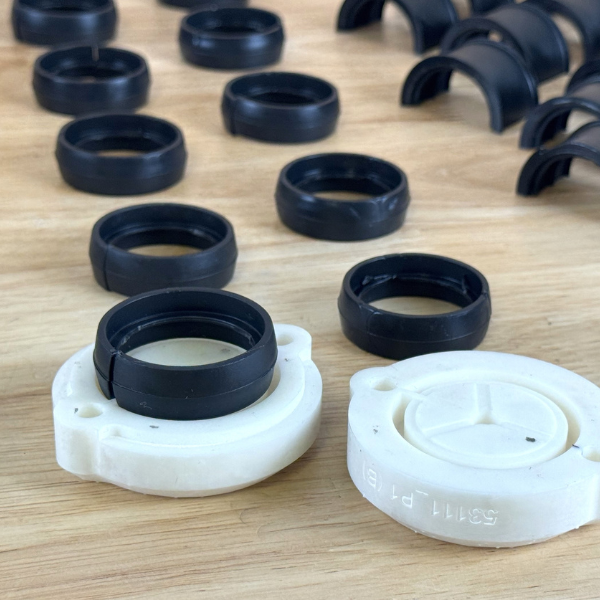
Design and 3D printing of resin molds, followed by the injection molding of several batches of parts.
The molds were 3D-printed using Formlabs Rigid 10K and Grey V5 resins. Parts were then produced using the HoliPress 38 with different materials, including polypropylene (PP) and 30% glass-fiber-reinforced polypropylene (PP GF30).
Depending on the part design, each production run consisted of 20 to 80 parts per variant.
The parts were connectors designed to fit together and link different components.

We are currently developing a new mechanized compact injection molding machine featuring precise pressure control. The aim is to deliver more consistent, repeatable results across successive injection cycles.
Subscribe to our newsletter to be notified when it launches.
Need to produce a small batch of plastic parts?
Don’t let tooling costs hold your project back.