
Validate your designs using real thermoplastics with HoliPress — without the cost and lead times of industrial tooling.
HoliPress adapts to your development process, whatever stage your project has reached:
Start injection molding at the earliest prototyping stage
Test a part’s geometry or material properties right from the start, without unnecessary intermediate steps.
1. Validate the shape
Start by 3D printing a prototype to check its ergonomics, dimensions and overall geometry.
2. Create the mold
Once the design is validated, 3D print the mold cavity using resin.
We recommend SLA, DLP and PolyJet technologies, all of which we have tested for producing high-quality molds for plastic injection molding.
3. Use the right process and the right material
Inject your parts using the actual thermoplastic intended for your final product.
4. Get a fully functional prototype
Produce injection-molded parts representative of the intended production material and process. Use them to validate sealing performance, mechanical strength and pressure resistance.
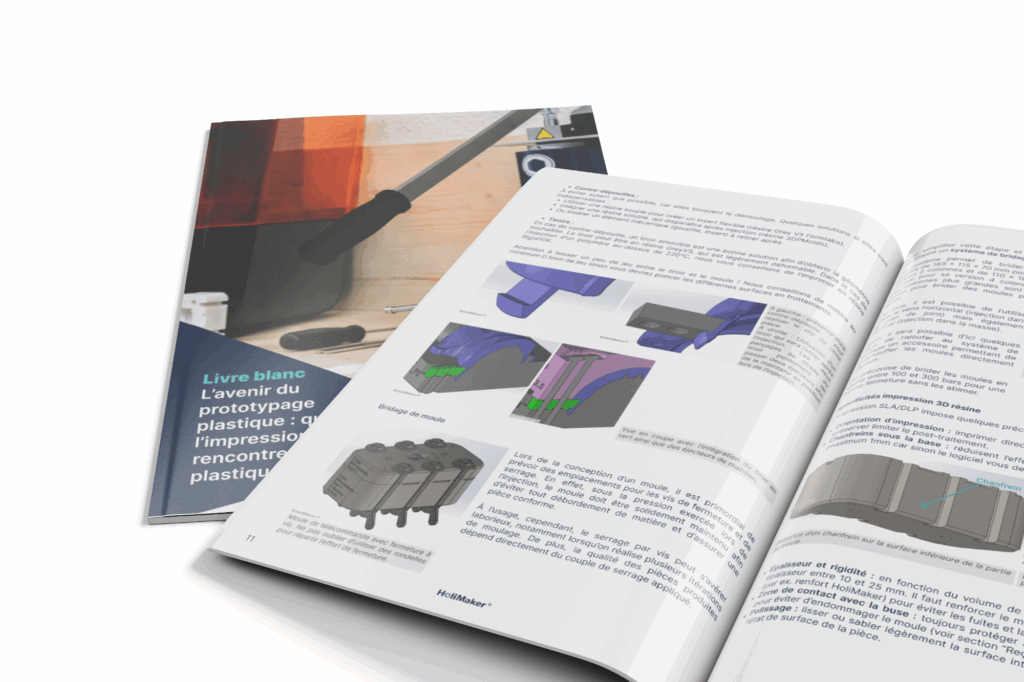
Designing and 3D Printing Resin Molds for Plastic Injection Molding
Learn how to size your SLA molds, choose the right resin and optimize your injection parameters to produce prototypes independently.
"Thanks to HoliPress, we have reduced validation lead times and tooling costs for our precision prototypes, while testing our parts in their final materials."
— Yann Fromont, Rubber & Materials R&D Expert from Aptar Pharma

Drug delivery devices and dispensing systems
Discover how the Aptar Pharma Injectables team accelerates early-stage testing and evaluates different materials using compact injection molding machines.
Aptar is a global leader in packaging and dispensing solutions, operating in more than 20 countries. The group designs and manufactures innovative solutions for the pharmaceutical, beauty and consumer goods industries.
Have a plastic part to prototype?
Avoid production bottlenecks and costly mistakes in your tooling.